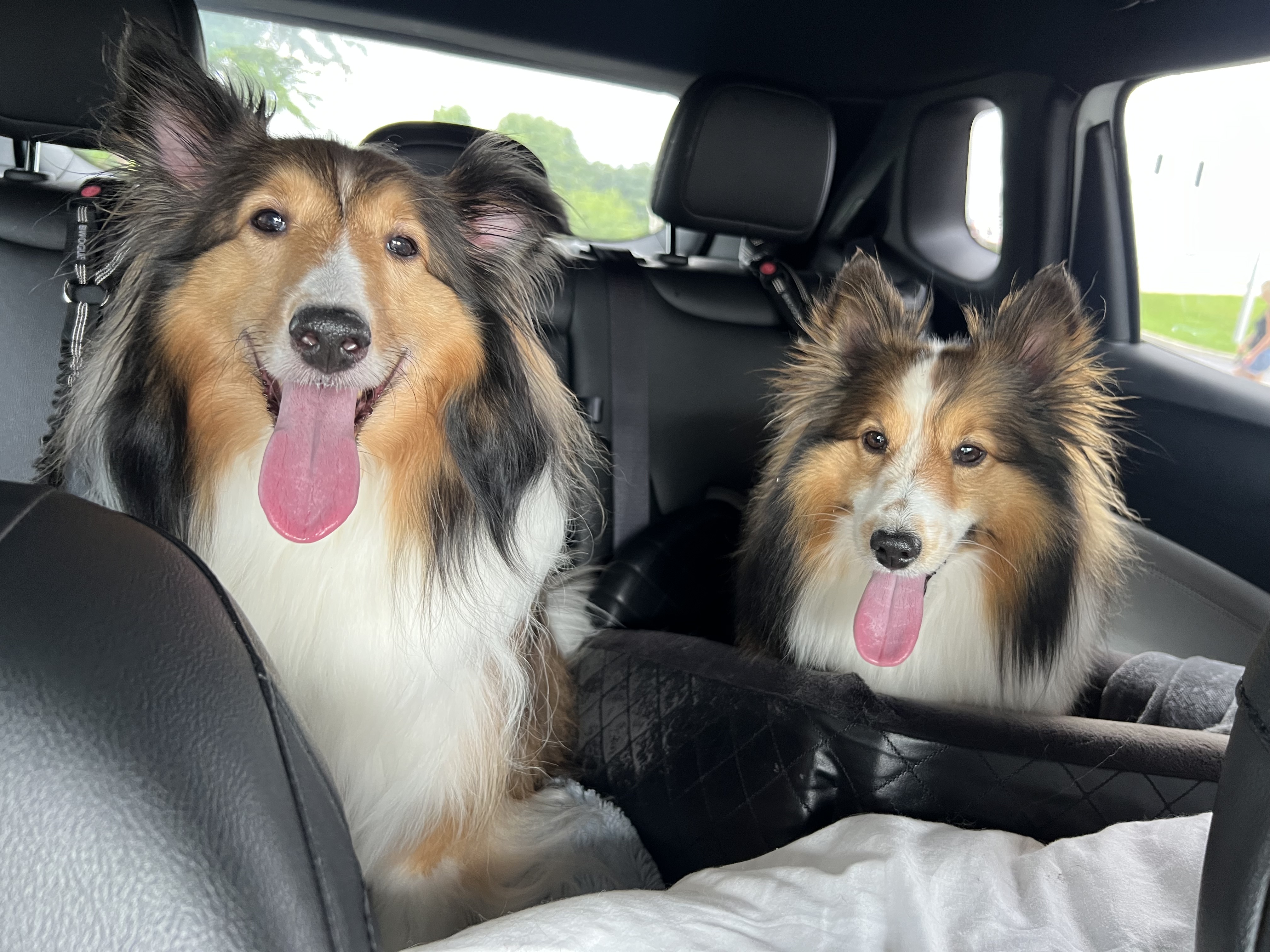
Finding the Perfect Donor for Your Dog: Understanding DLA Testing
If your dog has recently been diagnosed with Lymphoma or Leukemia, or a non-cancerous disease of the bone marrow, know that CTAC is here to support you through this process. When speaking with your dog's veterinary oncologist, something that may be an option is a procedure known as a bone marrow transplant.
A bone marrow transplant is performed in hopes of bringing a cure to your dog’s cancer, as chemo alone has less than a 2-3% chance of a cure. There are two types of stem cell transplant: autologous (self-transplant) and allogeneic (donor transplant). One of the most important—and sometimes most challenging—parts of this process is finding a donor whose cells are a match to your dog’s. A bone marrow transplant involving a donor for your dog offers the highest chance of success, so that’s where DLA testing comes in.
Donor selection can be challenging and time-consuming, as they need to be blood relatives of your dog. Unfortunately, not every family has access to their dog’s blood relatives. In these cases, an autologous transplant may still be an option for your dog. Please reach out to discuss autologous transplants more with our team.
What Is DLA Testing?
DLA testing is a special kind of genetic test used to check how closely related two dogs are in terms of their immune system genes. This is especially important when you're looking to see if a related dog—like a sibling—could be a bone marrow donor for your dog. DLA stands for Dog Leukocyte Antigen, which is a key part of your dog’s immune system. These antigens are special markers that act like "ID tags" on the surface of the white blood cells. These “ID tags” help your dog's immune system tell the difference between their own cells and anything that doesn’t belong, like viruses, bacteria, or cells from another dog.
If your dog needs a bone marrow transplant, DLA (the “ID tags” of these specific genes) is very important. Your dog's immune system will check the transplanted donor cells to see if their “ID tags” match. If the immune system finds that they don’t match well enough, one of two things can happen:
● The donor’s immune cells may see your dog’s cells as foreign and attack them Note: To a degree, we want the donor’s healthy, “cancer-free” cells to attack your dog’s cells, but in a controlled manner. This is done with the help of an oral medication given during and post-transplant.
● Your dog’s immune system may see the donor cells as foreign and try to attack them
This reaction is called graft-versus-host disease. To lower this risk and improve the chances of a successful transplant, it’s essential to find a DLA-matched donor. Since these genes are highly variable (there are lots of different versions in the dog population), it’s not possible to tell what “ID tags” a relative has without testing.
To have this test performed, seek help from your local veterinarian or veterinary oncologist. It is a very quick and non-invasive process–the veterinary team will simply draw a small amount of blood to put it in a specific blood tube for you to then ship to a lab in Seattle. The donor dog will also need to get a small sample of blood drawn for you to then send to the same lab. We recommend shipping these samples as quickly as possible to avoid them getting lost in transit or experiencing delays, as once the blood is drawn the sample is only viable for one week. This testing takes roughly 3 weeks for results to be provided. Due to the time testing takes, we recommend sending in samples as soon as possible to avoid delay in treatment. Please ask our team for more information/instructions for DLA testing.
DNA Breakdown
In dogs, the best donor matches usually come from full siblings, meaning litter mates or a dog from a different litter that still has the same parents as your dog. There is a 25% chance that a tested sibling will share the same DLA genes as your dog and be a compatible match.
🧬 Which Genes Do We Look At?
There are four key genes involved in DLA typing:
● DLA-88
● DRB1
● DQA1
● DQB1
🧬 How Are These Genes Inherited?
Each puppy gets two copies (called alleles) of each of these four genes—one from the mother and one from the father. Because of this, a sibling has a few possible combinations:
1. The sibling could inherit the exact same set of alleles as your dog
2. The sibling might share just one of the two alleles
3. The sibling might not share any alleles at all
The odds of a relative being a match gets cut in half each time you step further down in your dog’s lineage. While a sibling statistically has the highest chance of being a DLA match, we
recommend testing any blood relatives as potential donors. At CTAC, we've seen recipients successfully match not only to littermates but also to their mother, their father, several to their half-siblings, their nephew, and even their half-niece. So, just because the odds may be low for some relatives to be a match, it does not mean the odds are zero.
The Donor Hunt
Unfortunately, finding a perfect match outside of your dog's family is extremely rare. Unlike in humans—where unrelated matches can sometimes be found through donor registries—there is currently no large-scale canine donor database. Most dog owners, aside from those with breeders, rarely know the whereabouts of their dog’s family members. So, where should you start the donor hunt?
1. Locating your dog’s littermates, parents, offspring, or extended family is where to start. Try contacting your breeder or the shelter/rescue from which your dog was adopted to see if they would be able to get you in contact with these families.
— Many breeders have been receptive and willing to help our patients' families as much as they can. Some breeders still own some of the relatives and have offered to get their own dogs tested to see if they were a match, but of course, every breeder is different. Most rescues and shelters keep great records for years after adoption, so if your dog had relatives at the shelter with them, they most likely know where they ended up as well! —
2. Another potential option could be doing a DNA test. DNA test kits are sold online and can tell you your dog’s breed– which can be great for those with mixed breed dogs– as well as screen for health and genetic disorders, and potentially identify any relatives your dog may have. Some examples of common DNA tests include: Embark, Wisdom Panel, and Ancestry Dog DNA.
— A recent CTAC family was able to do an Embark DNA test and locate a relative of their dog. This dog’s family had also happened to do this DNA test in the past, which is how they were able to find each other in the Embark database. This was the only relative this patient’s family was able to find for their dog, and it turned out they lived not far from where our CTAC patient lived. They contacted the family, who kindly agreed to get their dog tested. This ended up working out perfectly, because they were a match! The donor family was able to make logistics work, and the recipient was able to receive their life-saving bone marrow transplant! —
3. Social media is also a very good resource. Many breeders and families with puppies from the same litter, rescue groups, and shelters have social media groups or pages where they do updates or are used to keep people in touch. This is a good way to get in contact with families about being a donor.
— A previous CTAC dog's family was able to find 20+ blood relatives of their dog through social media. This family was able to find a donor match and proceed with the bone
marrow transplant, all because of social media! —
The Importance of Early Planning
If your dog is diagnosed with lymphoma or leukemia, you need to discuss all options with your oncologist. If you are interested in possibly doing a bone marrow transplant for your dog, you want to start looking into your options for a potential donor as soon as possible. Finding relatives can be time-consuming, and completing DLA testing takes about 3 weeks to yield results. Having DLA testing already in progress or even a match already found by the time your dog achieves remission could give you life-saving time with your dog. The ideal time for your dog to undergo a bone marrow transplant, with the best odds of a cure, is after their first remission is achieved, rather than after a relapse. Being proactive could be the key to giving your dog the best possible outcome!
CTAC is here for you and your dog during this process. While we are unable to help find donors directly, we are here to support you and can speak to any donor families that may have concerns before they agree to the DLA testing. We also have a handbook available to send to these families that details more about what their dog being a donor would look like. We recommend sending this to all potential donor families to make sure they understand what agreeing to be DLA tested would mean if their dog is a match to yours. CTAC staff will happily send you a copy of this to share if you do not have one already, so please reach out!
CTAC’s goal is to help as many families as we can while spreading the word about this life-saving procedure. We know how important your dog is to you! Each CTAC team member has a dog (or multiple dogs) and we too understand: they’re not just pets, their family!